If there is one vegetable that perfectly encapsulates the cuisine of Puglia in southern Italy, it is cime di rapa.
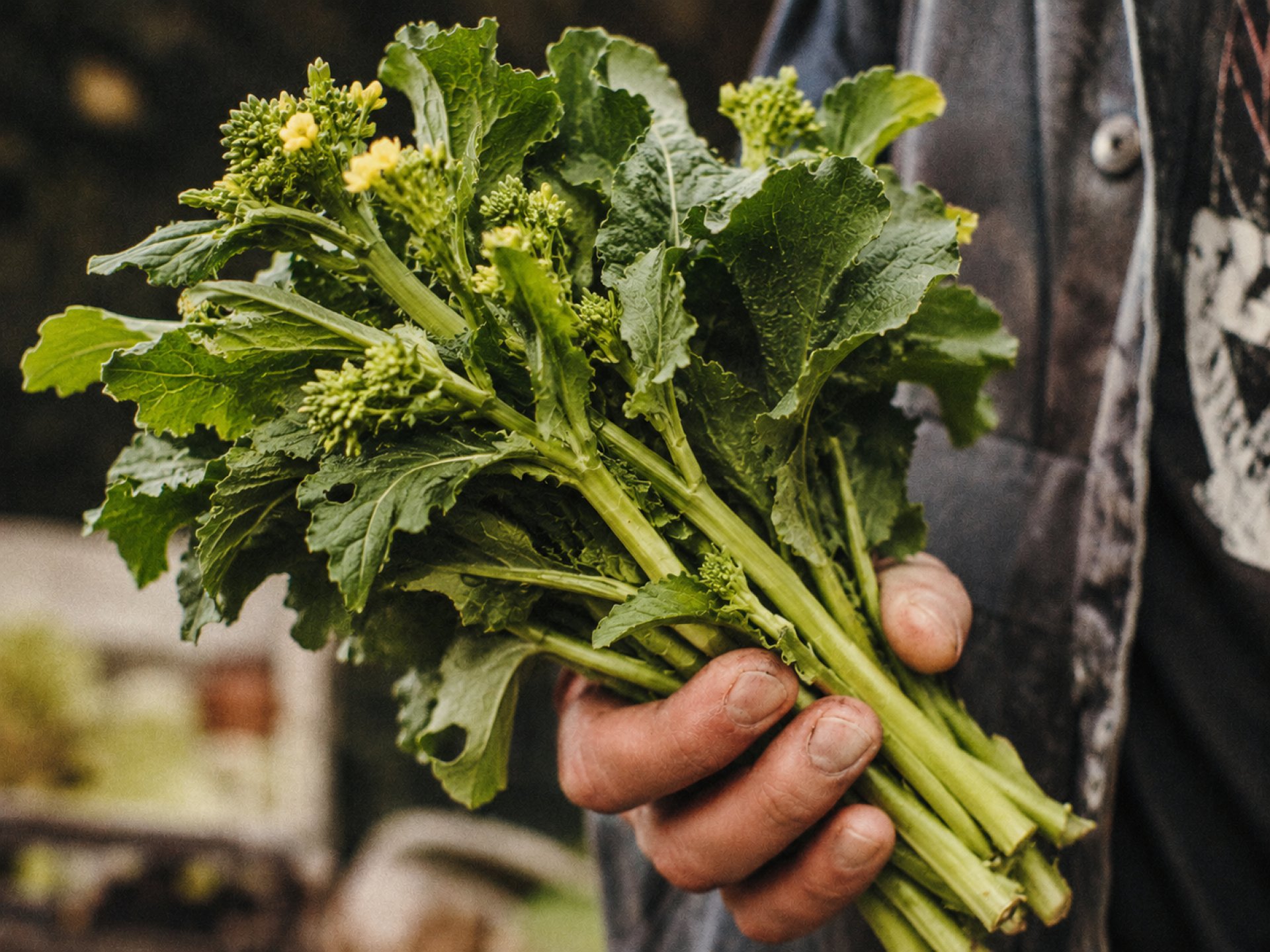
If there is one autumn vegetable that perfectly encapsulates the cuisine of Puglia in southern Italy, it is cime di rapa. At first glance, this perhaps unassuming leafy vegetable, which bears a slight resemblance to broccoli, holds a special place in Italian gastronomy. Its slightly bitter taste, distinctive aroma and versatility make it one of the most popular ingredients in Apulian cuisine.
And just like high-quality olive oil, cime di rapa are proof that the best things are often found in simplicity.
WHAT EXACTLY ARE CIME DI RAPA?
Cime di rapa, sometimes also referred to as wild broccoli, broccoli rabe or rapini, are vegetables from the Brassicaceae family. It is primarily their green leaves, stems and unopened flower heads – which resemble small broccoli florets in appearance – that are used.
Their flavour is quite distinctive – slightly bitter, earthy and pleasantly piquant. It is precisely this characteristic bitterness that Italians love so much about them. Combined with high-quality extra virgin olive oil, garlic and chilli, it creates an unmistakable flavour that is typical of southern Italian cuisine.
Cime di rapa are also a seasonal vegetable, harvested in Italy mainly during the autumn and winter months, and thus provide an excellent and natural source of vitamins, minerals and fibre during an otherwise nutrient-poor period.
A VEGETABLE THAT BELONGS TO PUGLIA
In the Puglia region, particularly around Bari, cime di rapa are a cornerstone of the local cuisine. You’ll find them at markets, in home kitchens and on the menus of traditional trattorias.
Their popularity stems from a long local culinary tradition based on seasonal and local produce. Apulian cuisine does not require complicated recipes or dozens of ingredients. What matters is the quality of the individual ingredients and the ability to bring out their natural flavour.
Cime di rapa are a wonderful example of this. Just a few basic ingredients are enough to create a dish that perfectly captures the character of this Italian region.
ORECCHIETTE CON CIME DI RAPA — A CLASSIC YOU SIMPLY MUST TRY
The most famous dish in which cime di rapa plays the leading role is, without a doubt, orecchiette con cime di rapa.
This is a traditional Apulian pasta shaped like little ears, prepared with this vegetable, garlic, chilli and extra virgin olive oil. Anchovies are also often added, lending the dish a pleasant saltiness and umami flavour.
The individual ingredients complement each other perfectly. The bitterness of the greens balances the delicacy of the pasta, whilst the garlic and chilli give the dish its character, and the olive oil brings everything together into a harmonious whole. This dish is one of the best-known symbols of Apulian cuisine and remains to this day one of the traditional dishes that locals prepare in their own homes. For an even more pronounced flavour, Italians often cook the cime di rapa directly with the pasta and, just before the pasta is done, give it a quick toss in the pan along with the pasta.
A BRILLIANTLY SIMPLE AND QUICK RECIPE
Cime di rapa are a popular ingredient partly because they don’t require complicated preparation or long cooking times. Simply cut off the bottom part of the stalk, which tends to be woody, chop the rest of the plant coarsely, and boil briefly or fry in olive oil with garlic and chilli. Cime di rapa and high-quality extra virgin olive oil make an exceptionally natural combination.
The vegetable’s distinctive, slightly bitter flavour complements the fruity notes of the olive oil beautifully. If you use fresh novello olive oil, you’ll achieve an even more interesting flavour contrast. Its freshness, intense aroma and subtle piquancy serve to emphasise the character of this vegetable even further.
As well as the traditional pairing with orecchiette pasta, cime di rapa are also served sautéed on toasted bruschetta as a simple starter, as a quick and tasty side dish with meat, or as a filling for savoury tarts.