In the hustle and bustle of everyday life, we often think about the origin of our coffee, the quality of our olive oil, or the ingredients in our food. But we usually forget about one of the most basic ingredients—salt. Yet we use it in almost every meal, and its flavor can subtly influence the entire result.
Why Pay Attention to Even Ordinary Salt
The difference between industrially processed and natural salt is greater than it might seem. Refined salt has been stripped of its natural qualities—it is purely salty, uniform, and characterless. In contrast, natural sea salt retains a trace of the place where it comes from. It contains minerals including magnesium, calcium, potassium, and iodine, as well as a subtle moisture and flavor nuances that cannot be artificially created.
It may seem like a small thing. But it is precisely these small things that often make the difference—not only in the taste of food, but also in how we think about food.
Natural Salt from Trapani: A Treasure from the Sicilian Salt Pans
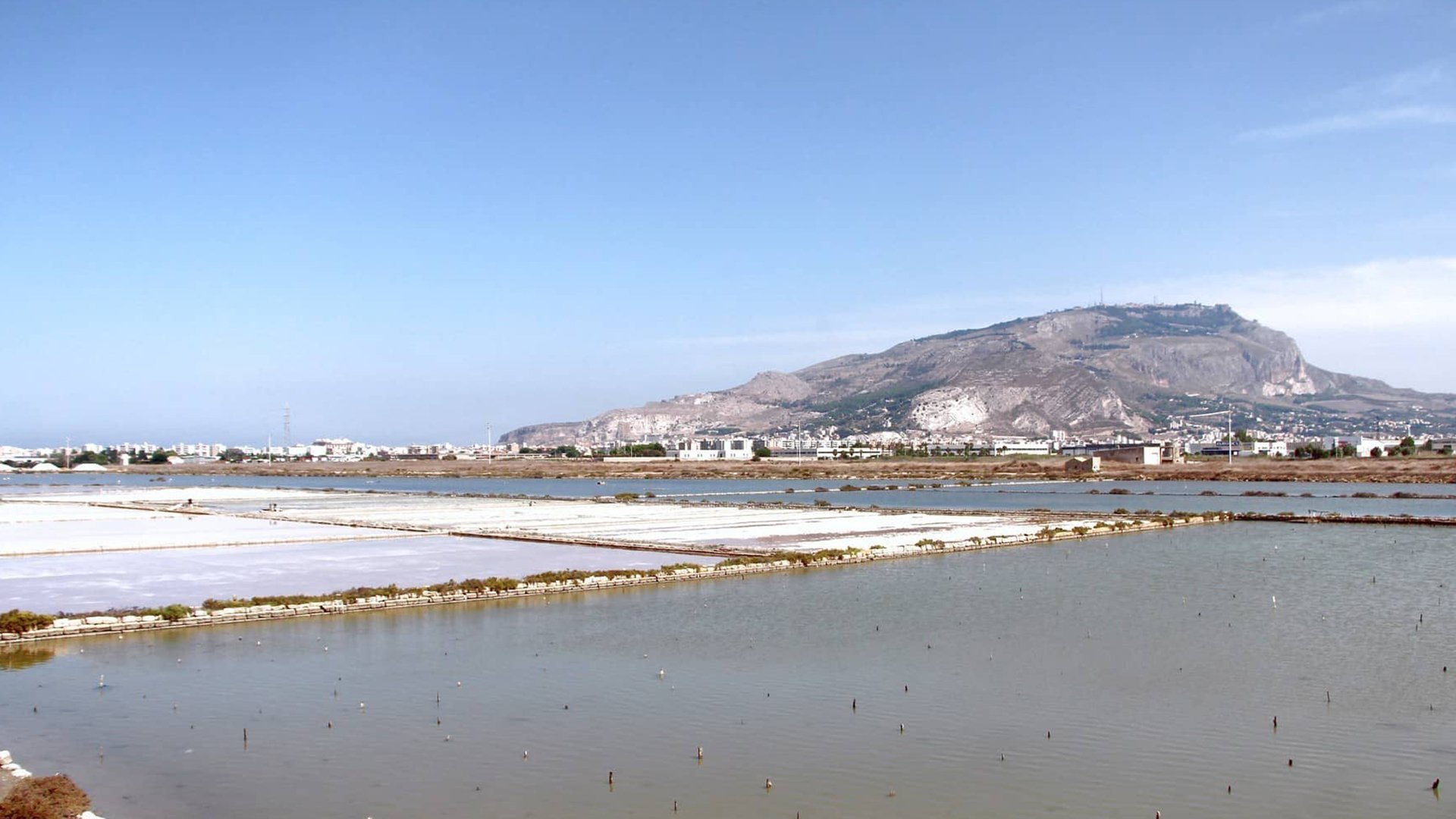
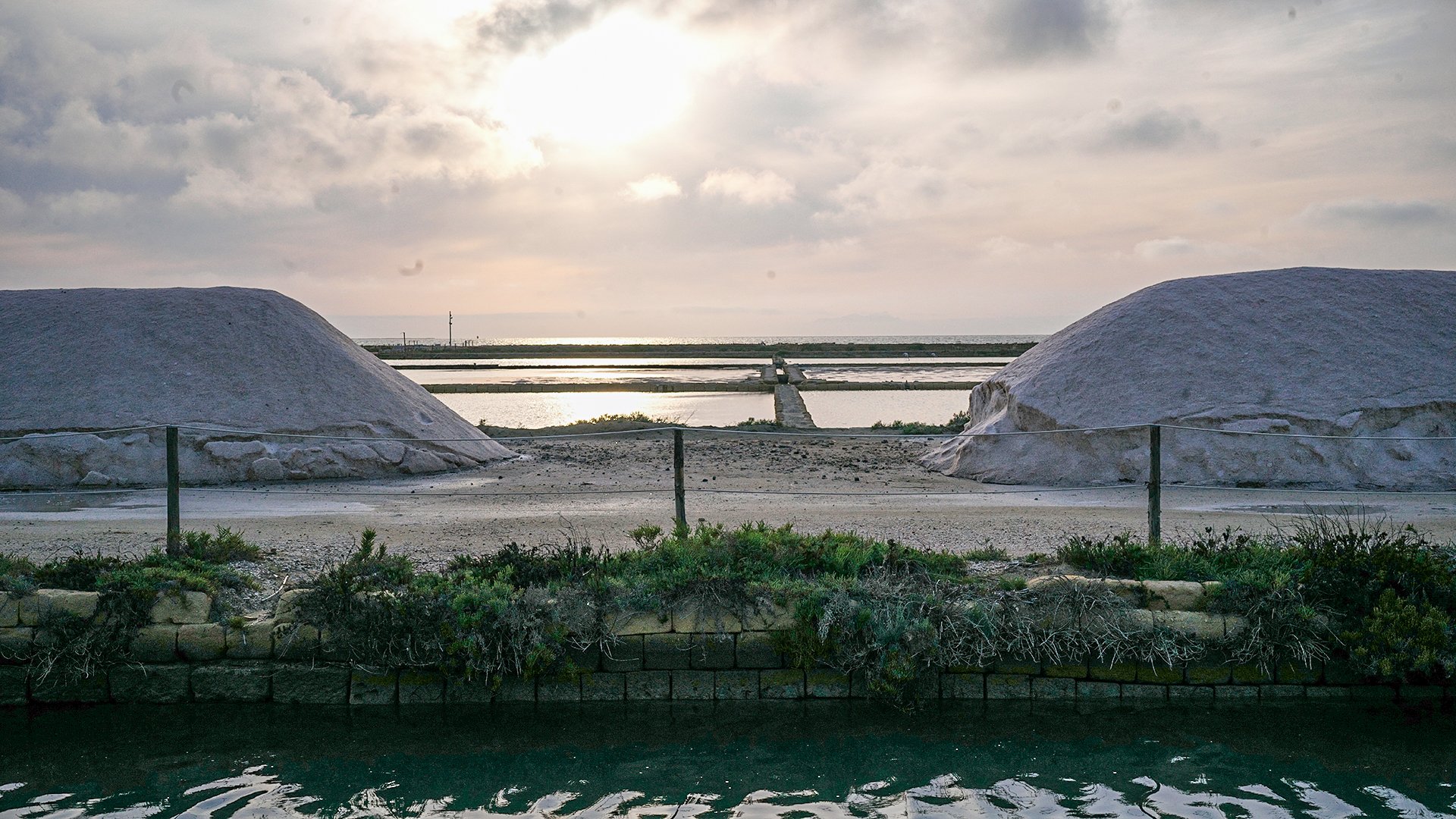
On the western coast of Sicily, near the city of Trapani, lie some of the oldest salt pans in Europe. The Phoenicians were already mining salt here in the 9th century B.C., and this tradition has continued to this day.
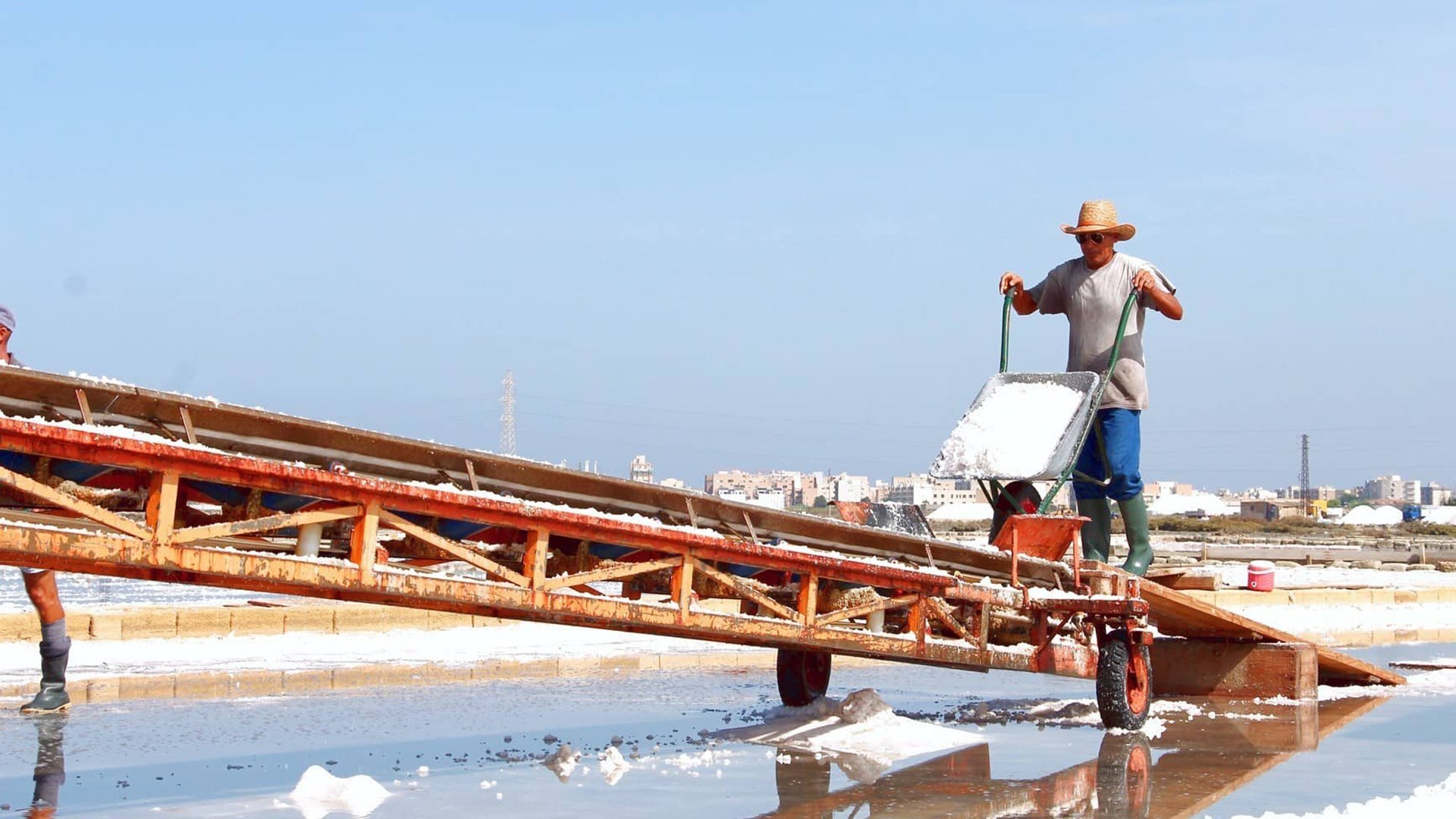
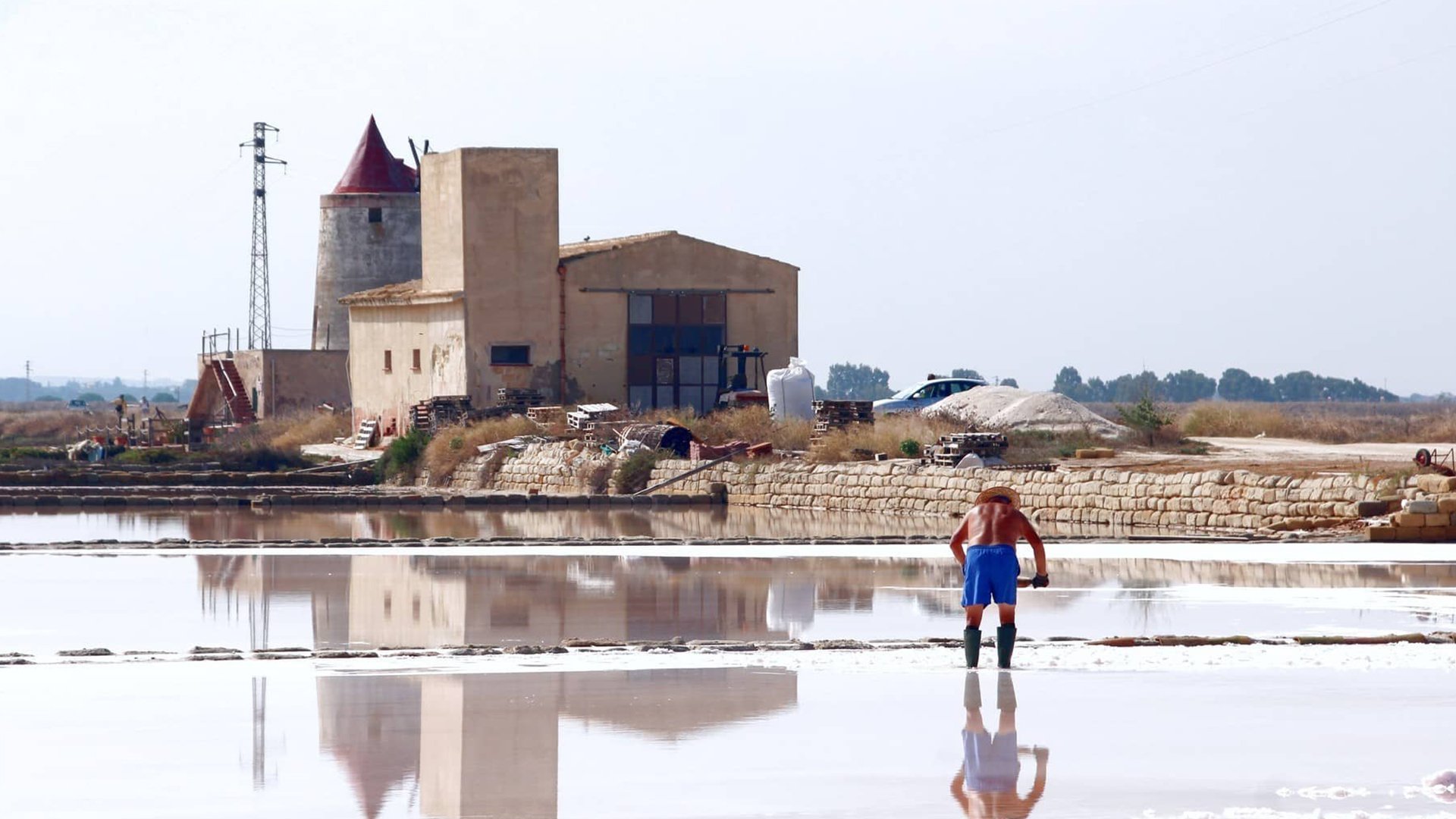
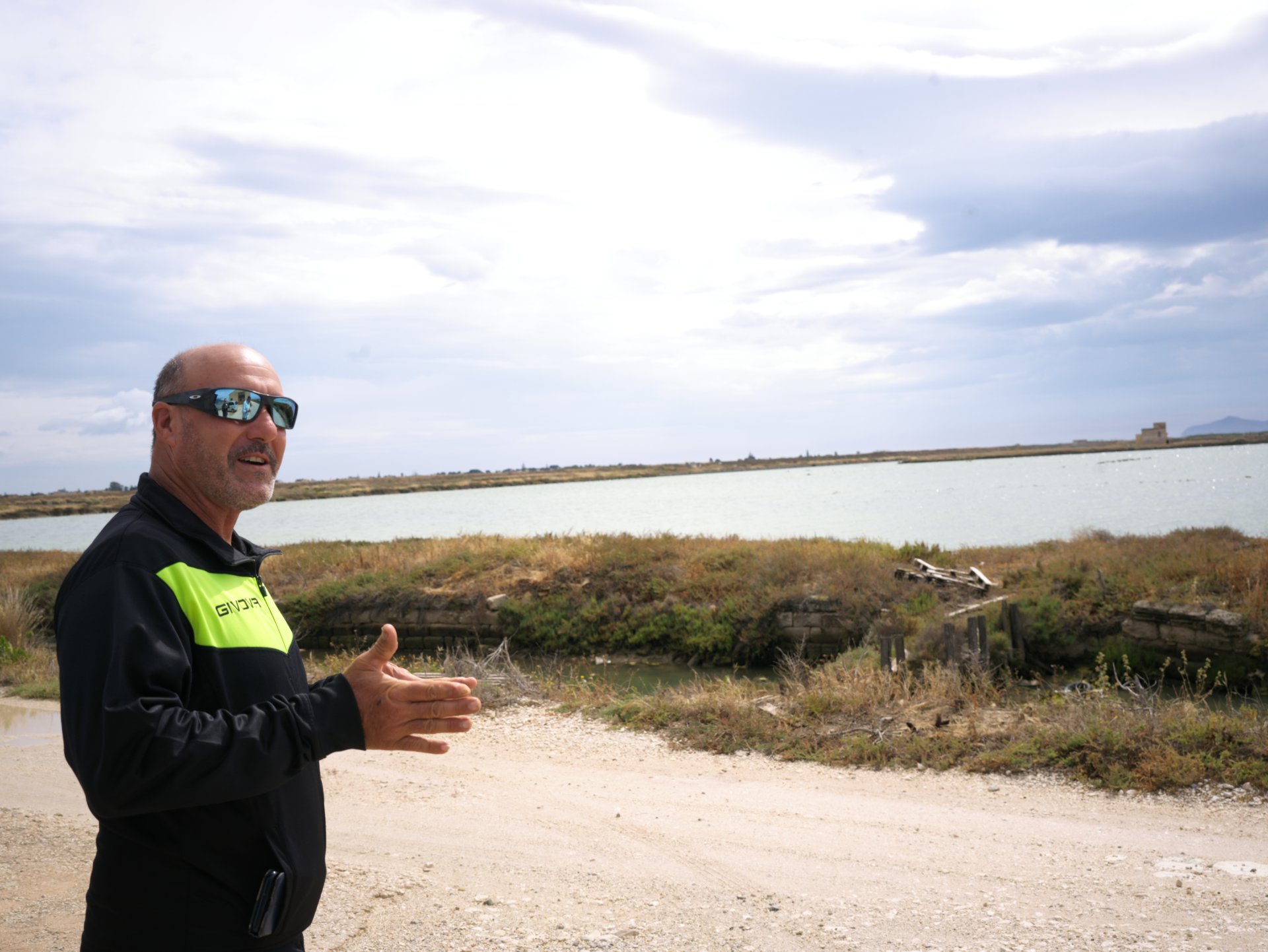
It is from here that the renowned natural sea salt originates, having gained worldwide recognition for its purity, traditional production, and mineral content. One of those who continues the artisanal production of salt in the Galia salt pan today is Massimo Daidone.
Traditional Production Without Chemicals
Trapani salt is obtained through the natural evaporation of seawater in shallow lagoons, known as salt pans. This process relies solely on the sun and wind, without any chemical intervention.
It all begins in April, when the tanks closest to the sea are filled with seawater, and in the following months, the salts contained in the seawater precipitate out. Once this occurs, the water is transferred to other tanks. In these, sulfates are gradually released from the water, and the water flows into “crystallization” tanks, where the process of sodium chloride precipitation takes place, resulting in the appearance of white sea salt on the surface.
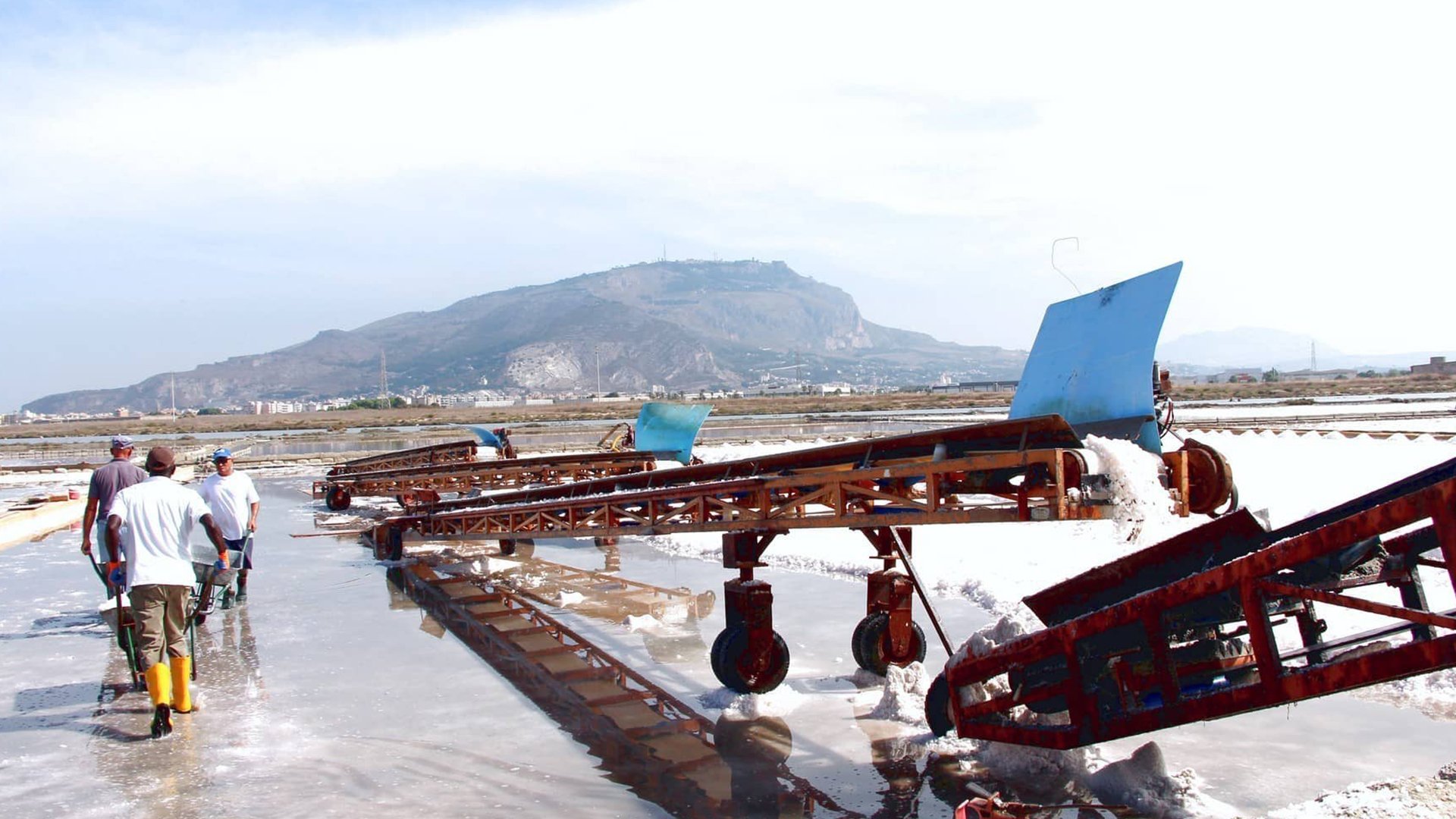
Between August and September, the salt is harvested by hand and left to mature in special areas called “arioni.” Only when the time is right is Trapani salt ready for its journey to kitchens and salt shakers.
Unique flavor and texture
Natural salt from Trapani is naturally moist, has finer crystals, and a less aggressive saltiness than regular refined salt. This makes it ideal for both everyday cooking and for seasoning dishes at the end of preparation. It is popular among chefs and food enthusiasts who appreciate its ability to enhance the natural flavor of ingredients.
Ecological and cultural significance
The salt pans in the Trapani area are not only a production site but also a significant ecosystem. They are part of the Riserva Naturale Saline di Trapani e Paceco protected area, home to rare bird species, including flamingos.
Salt production here represents a harmony between humans and nature. Preserving traditional methods helps protect not only the quality of the product but also the region’s cultural heritage.
Why choose salt from Trapani?
- 100% natural product with no chemical processing
- Naturally rich in minerals and iodine
- Traditional handcrafted production
- Environmentally friendly
- A delicate, complex flavor that enhances the natural taste of dishes without overpowering it
Serving suggestion
Meat roasted in a salt crust